







-
Nov 15, 2023Welcome Prof. Kumar Tamma to join JPSE editorial team
 Welcome Prof. Kumar Tamma to join JPSE editorial team as Co-Editor-in-Chief.
 -
Aug 7, 2023Section Collection Project Welcomes Submissions
This new Section Collection project is a great attempt to develop new ideas and applications. It is a great opportunity for journals and scholars in the field.
Please visit here to see the active sections available.
If you have a Section you want to join, please join us now! If you have a Section you want to contribute to, we also welcome your proposal!
Audrey Yap
Managing Editor
Contact Email: editorial-jpse@enpress-publisher.com
-
Jun 9, 2022MACRO 2022- The 49th World Polymer Congress
 Mar 26, 202284th Prague Meeting on Macromolecules – Frontiers of Polymer Colloids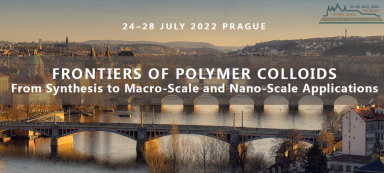
This PMM was originally planned to be held in July 2020 and first postponed in July 2021. It is again postponed and rescheduled for July 24–28, 2022.
Apr 16, 2021The 48th World Polymer Congress (IUPAC-MACRO2020+)The 48th World Polymer Congress (IUPAC-MACRO2020+) will be held from May 16th to 20th, 2021 in Jeju Island, South Korea. This event was initially scheduled 5-9 July 2020.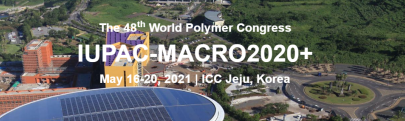 Oct 18, 2020Poly-Char 2020 [Venice] – International Polymer Characterization Forum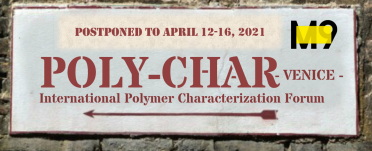
This conference was initially planned to be held from May 18-22, 2020 and postpone to October 5-9, 2020. Ultimately, it was rescheduled 12-14 April 2021.
Feb 13, 202010th International Symposium on Molecular Order and Mobility in Polymer Systems The 10th International Symposium “Molecular Order and Mobility in Polymer Systems”, MOMPS-X, will be held by the Institute of Macromolecular Compounds of Russian Academy of Sciences in St. Petersburg, Russia,May 18-22, 2020.


