

-
Sept 6, 2023New version of author guideline format
Please follow the journal's author guideline and the required article template to prepare your manuscript.
-
Jul 1, 2023Decontamination of surface water from organic pollutants using graphene membranes
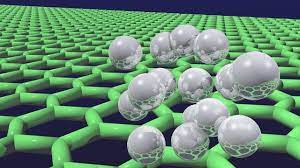
One of the most important problems nowadays is the contamination of the environment and more specifically of surface and underground waters by toxic substances, e.g., heavy metals and organic pollutants. Shortage of supplies of potable water is occurring in many areas worldwide, owing to the steady increase of the population, yielding to the harsh exploitation of water resources by human activities, which introduce many contaminants, including organic dyes, heavy metal ions, salts of light metals. In order to contrast what has by now already turned into one of the most severe concerns in the world’s community, it is necessary to carry out the decontamination of wastewater. Graphene oxide (GO) is a valid candidate for the absorption and removal of pollutants in water.
Graphene material is gradually being used in the fields of electronic technology and biomedicine due to its properties such as ductility, expandability and flexibility. The author gets efforts to explore some commercial graphene products such as graphene materials, aims to demonstrate a method to monitor the status of such a filter in real time during its operating phases: pollutant adsorption, saturation, and regeneration.
This study first showed that all types of graphene have excellent adsorption properties. This appears to be due to its large available surface area. This experiment provides a reference for exploring low-cost graphene materials and products preparation. With the continuous discovery of the properties of graphene and its composites and the continuous innovation of the preparation process, graphene will be applied to various devices in daily life and become an indispensable part of our lives.
More details, please read the article.
-
Jun 30, 20232023 Volume 6 Issue 1 is released now!Volume 6, Issue 1 is now officially released and we are honored to have Prof. Amir Hatami write the Editorial to this issue. Please read here.
-
Jan 31, 2023CAN has been included in the CAS databases!
We are glad to announce that Characterization and Application of Nanomaterials (CAN) has been included in the CAS databases!
The response email is as follows:
I am pleased to inform you that Characterization and Application of Nanomaterials [ISSN: 2578-1995], has been found suitable for inclusion in the CAS databases. We will begin coverage with the 2022 issues. We will routinely check the website and put the new issue into our production system.
If you have questions or concerns, please don’t hesitate to contact me.
Best regards,
Thanks to all the authors and reviewers!
-
Dec 12, 2022Meet Our New Editor-in-Chief:Prof.Dr. Francesco Tornabene
Francesco Tornabene received from the University of Bologna - Alma Mater Studiorum, a M.Sc. degree in Mechanical Engineering (Curriculum in Structural Mechanics) in 2003. He subsequently received his Ph.D. degree in Structural Mechanics at the University of Bologna in 2007. He has been an Assistant Professor and Lecturer since 2012, and from 2022, he has been an Associate Professor. For a long time his scientific interests include the Structural Mechanics, Solid Mechanics, Innovative and Smart Materials, Computational Mechanics and Numerical Techniques, Damage and Fracture Mechanics. He is author of more than 280 scientific publications and 11 books, and collaborates with many national or international researchers and professors all over the world, as visible from his scientific production. In the last years he received different important awards, see e.g. “Highly Cited Researcher by Clarivate Analytics” (years 2018, 2019, 2020).
We express our sincere thanks to Prof. Francesco Tornabene for his support and look forward to his guidance in helping Characterization and Application of Nanomaterials reach new milestones.
-
Feb 9, 2022The state-of-the-art of piezoelectric energy harvesting
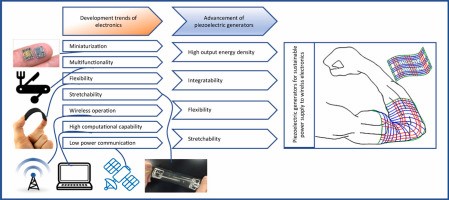
The global energy crisis and environmental pollutions caused mainly by the increased consumption of nonrenewable energy sources prompted researchers to explore alternative energy technologies that can harvest energies available in the ambient environment. Mechanical energy is the most ubiquitous ambient energy.Piezoelectric transduction is the prominent mechanical energy harvesting mechanism, Thus, piezoelectric energy harvesting has received the utmost interest by the scientific community.Advancements of micro and nanoscale materials and manufacturing processes have enabled the fabrication of piezoelectric generators.
-
Sept 9, 2021Bamboo inspires faster battery recharging
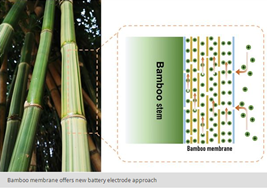
Scientists from Queensland University of Technology have developed a new way to boost the efficiency of batteries with electrodes that can be recharged at a much faster rate based on the unique properties of bamboo. The study, which furthers research into 2D nanomaterials for the very fast transport of ions through a battery, was inspired by a water-carrying membrane inside bamboo that allows it to be the fastest growing plant in the world.
The lab of Ziqi Sun has been studying how best to mimic the structural and optical properties of natural objects – such as seashells that have inspired advanced optical thin films, fish scales that have inspired multifunctional nano-coatings – to develop sustainable energy solutions from low-dimensional nanomaterials.
-
May 20, 2021A new perspective on the application of nanomaterials to tumors
What is the nanomaterial?
Nanometer materials refer to materials whose structural unit sizes are in the range of 1 nanometer to 100 nanometers. This new type of material was discovered by scientists in the middle of the last century. Due to its unique size and structure, this new type of material has acquired unusual capabilities.