







-
Mar 6, 2021CNT is the strongest material , with astonishing mechanical properties
Research in carbon nanotubes (CNTs) has gained enormous interest in nanotechnology and materials science due to its remarkable physical and mechanical properties.
-
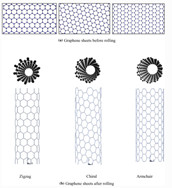
Nov 23, 2020Emission Properties of Carbon Nanotubes
One of the most promising applications of CNTs is in field emission (FE) devices. High aspect ratio and atomically sharp radius of apex curvature of the CNTs enhance the local field and lower the threshold field for electron emission.
-
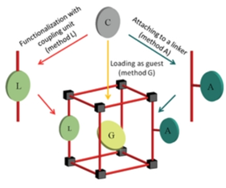
Sept 25, 2020What Are MOFs?
In recent years, a particularly attractive and novel strategy has become available for the fabrication of photoresponsive, porous, and crystalline molecular solids from appropriately functionalized chromophoric linkers.
-
Mar 15, 2020Advances and Applications of Diamond-like Nanocomposite
Diamond-like Nanocomposite (DLN) coatings are amorphous, hard and wear resistant coatings, deposited using a plasma-assisted CVD process. These coatings consist of two interpenetrating networks, one being a diamond-like carbon (a-C:H) network and the other a glass-like a-Si:O network.
-
Mar 10, 2020Nanocomposites are an important resource in the 21st century
In recent years, advances in nanotechnology have promoted the development of reinforcements with dimensions at the nano-scale (10−9 m). This dimensional shift has opened new possibilities for altering physical properties of polymer matrices (mechanical, electrical, thermal, etc.) by incorporating relatively small amounts of nanofillers (several weight percent or less) .

-
Nov 20, 2019lead halide perovskites are sensitive under light
Organic-inorganic hybrid metal halide perovskites, an important class of crystalline materials with excellent low-temperature solution processability and band structure tunability, have been known for decades. They have received great attention in recent years for applications in various types of optoelectronic devices, including photovoltaic cells, light emitting diodes and optically pumped lasers.
-
Sept 12, 2018Illinois engineers protect artifacts by graphene gilding
Gilding is the process of coating intricate artifacts with precious metals. Ancient Egyptians and Chinese coated their sculptures with thin metal films using gilding—and these golden sculptures have resisted corrosion, wear, and environmental degradation for thousands of years. The middle and outer coffins of Tutankhamun, for instance, are gold leaf gilded, as are many other ancient treasures.
In a new study, Sameh Tawfick, an assistant professor of Mechanical Science and Engineering at the University of Illinois at Urbana-Champaign, inspired by this ancient process, has added a single layer of carbon atoms, known as graphene, on top of metal leaves—doubling the protective quality of gilding against wear and tear.
Read more at: https://phys.org/news/2018-09-illinois-artifacts-graphene-gilding.html#jCp -
Sept 12, 2018Carbon nanodots do an ultrafine job with in vitro lung tissue
Epidemiological studies have established a strong correlation between inhaling ultrafine particles from incomplete combustion and respiratory and cardiovascular diseases. Still, relatively little is known about the mechanisms behind how air particulates affect human health. New work with carbon nanodots seeks to provide the first model of how ultrafine carbon-based particles interact with the lung tissues.
An international group of researchers created a 3-D lung cell model system to investigate how carbon-based combustion byproducts behave as they interact with human epithelial tissue. In Biointerphases, an AVS journal, the investigators discovered that the surface properties of the carbon nanodot's properties and aggregation patterns affected their distribution in a lab-grown copy of the lung's barrier layer, the epithelium. The carbon nanodots served as representatives for air pollution particles.
Read more at: https://phys.org/news/2018-09-carbon-nanodots-ultrafine-job-vitro.html#jCp


